Selecting Heavy Duty Brake Pads: Performance and Procurement Considerations — China Factory-Direct Guide
Technical guide for selecting heavy duty brake pads: materials, testing, performance trade-offs, installation notes, and China factory-direct procurement guidance for commercial buyers.
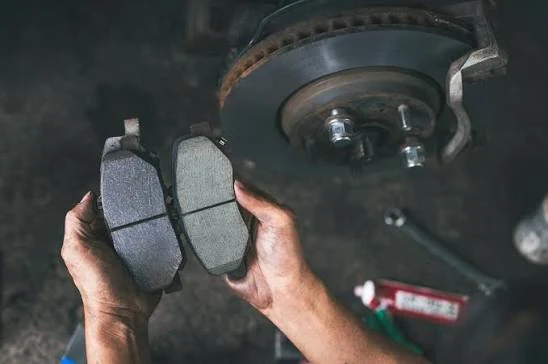
Quick Summary: Select heavy duty brake pads by matching friction material and backing design to vehicle operating profile (load, duty cycle, ambient temperature), verify dynamometer and fleet test data, and require batch traceability and quality-system evidence from suppliers. For bulk fleet procurement and commercial distribution, sourcing factory-direct container shipments from certified Chinese manufacturers provides 30–40% landed cost savings with full export compliance.
How to choose heavy duty brake pads: core technical factors
Heavy duty brake pads are chosen primarily to meet application-specific performance targets rather than single-number metrics. Key technical factors are:
- Friction material family: Sintered, semi-metallic, ceramic/organic blends—each offers different wear, noise, and heat behavior. Request supplier descriptions of compound type and intended application.
- Friction stability: Consistency of the friction coefficient across temperature and speed ranges. Ask for dynamometer test traces and the exact test method used.
- Thermal capacity: The pad’s ability to absorb and dissipate heat under repeated stops. Suppliers should provide thermal fade test results and recommended duty cycles.
- Wear rate and life: Wear depends on vehicle weight, typical route profile, and rotor material. Require supplier batch wear reports and, for fleets, real-world mileage correlations.
- Noise, Vibration & Harshness (NVH): Backing plate design, shims, and bonding technique affect squeal and vibration. Review supplier NVH mitigation measures and test results.
- Compatibility: Pad geometry, backing plate, and slot/chamfer patterns must match the caliper and rotor systems. Confirm OEM cross-reference or provide vehicle details for verification.
Material and bonding considerations
Material selection influences wear to both pad and rotor, dust generation, noise, and environmental acceptability. Evaluate bonding methods (mechanical anchors, adhesive, rivets) and backplate coatings for corrosion protection. Request material safety data sheets (MSDS) and compositional statements where environmental or recycling rules apply.
Testing and validation to request from suppliers
Ask potential suppliers for:
- Dynamometer test data showing friction versus temperature and fade recovery (include test standard reference supplied by the vendor).
- Batch traceability documents and incoming material certificates.
- Endurance / field test summaries for equivalent vehicle classes or independent fleet trial results.
- Quality system certificates such as ISO 9001 or IATF 16949 where the supplier serves automotive OEMs.
Practical application and maintenance guidance
For fleet buyers, match pads to the dominant duty cycle: city delivery routes with frequent stops favor compounds with high initial bite and low dust; long-haul, heavy-load use prioritizes thermal robustness and fade resistance. Specify OEM torque and bedding-in procedures for workshops; do not use generic torque values—use the vehicle or caliper manufacturer recommendation.
Evaluation table: buyer criteria for heavy duty brake pads
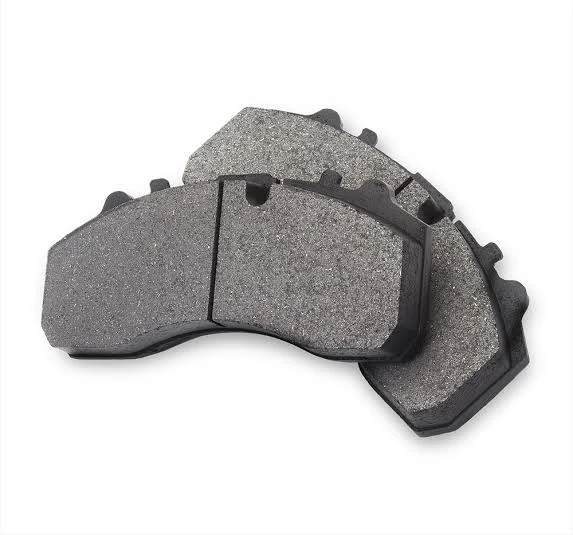
| Criterion | What to request from supplier | Buyer guidance |
|---|---|---|
| Material type | Compound description, MSDS, cross-reference to OE part (if any) | Choose material family that matches load profile; prefer documented fleet results for your vehicle class. |
| Friction stability | Dynamometer traces and test method reference | Require consistent friction across operating temps; ask for test conditions identical to your duty cycle. |
| Thermal performance | Fade/recovery data and recommended operating limits | Prioritize vendors who publish repeat-stop and fade testing applicable to heavy loads. |
| Wear & lifetime | Wear-rate reports, field mileage correlations, replacement interval guidance | Validate with on-vehicle trials; adjust reorder frequency to your operating profile. |
| NVH control | Design details: shims, chamfers, adhesive/bonding method, NVH test results | Inspect prototype parts for shim quality and shims’ adhesion; test-fit for local noise tendencies. |
| Quality & traceability | Batch numbering, incoming inspection records, quality-system certificates | Require traceability and supplier corrective action process for nonconformances. |
| Supply & logistics | MOQ, lead time, packing details, shipping incoterm | Confirm container options, mixed-SKU packing, and transit insurance terms before PO. |
Sourcing heavy duty brake pads from China: Quality Standards, MOQ & Container Logistics
When sourcing factory-direct from Chinese manufacturers, buyers should request verified documentation and realistic commercial terms:
- Quality and standards: Ask for supplier certifications such as ISO 9001 or IATF 16949 where relevant, plus material certificates and dynamometer test reports. For aftermarket regulatory conformity, request any applicable regional approvals (for example, ECE R90-type documentation where relevant, or DOT-related declarations for US applications) and exact test method references.
- MOQ and mixed-container options: MOQ varies by factory, part complexity, and whether the item is a stocked SKU or a custom compound. Many suppliers accept mixed SKU 20ft or 40ft container loads; confirm whether they permit mixed pallets or require full-SKU minimums. If you require lower-volume prototyping, request sample/test quantities and clearly document lead times and cost differences.
- Export lead times and port terms: Typical lead times depend on stock, molding/tooling status, and testing requirements—allow 4–12 weeks for most production orders. Confirm the Incoterm (FOB, CIF, DDP) and nominated export port; Qingdao and Ningbo are commonly used examples—confirm actual loading port and routing with the supplier. Ask suppliers for transit packing lists and export compliance documentation.
- Inspection and acceptance: Arrange pre-shipment inspection, factory test reports, and independent third-party audits where required. Specify acceptance criteria for visual defects, bonding integrity, and packaging.
Quality control checkpoints for incoming shipments
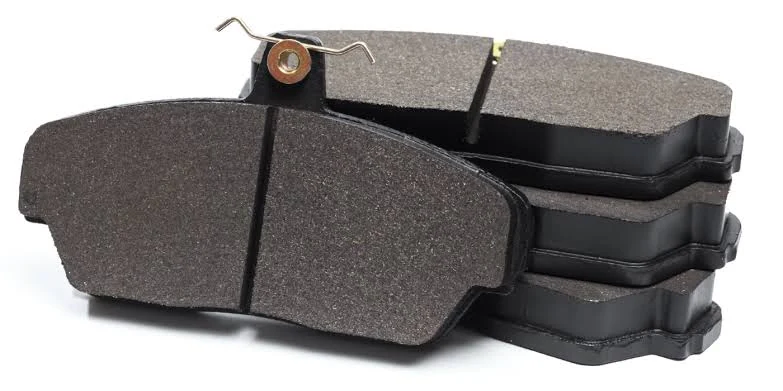
Include a receiving inspection plan: visual checks, dimensional verification to the drawing, bonding pull tests (sampled), and review of manufacturer test certificates. For fleets, run a small on-vehicle pilot batch to collect operational wear and NVH data before a full roll-out.
Conclusion and next steps
Match heavy duty brake pad material and backing design to the vehicle’s duty cycle, require vendor dynamometer and field-test data, and verify supplier quality systems and traceability. For procurement, request costed proposals that include MOQ options, container-mix capability, and exact Incoterms plus documented test evidence. Start with prototype samples, independent verification, and a small pilot fleet run before scaling to full fleet deployment.
Contact China Brake Factory procurement specialists to request technical datasheets, sample orders, and container-volume quotes. Provide vehicle applications, expected duty cycles, and target annual volumes to enable accurate supplier responses.
Discuss your brake parts program
Share your OE references, quantities, destination market and packaging requirements for a factory review.
Request a quotation
Connect with our export team
Scan or use the channels below for product and quotation support.