oem brake pads — China Factory-Direct Guide
Practical B2B guide for sourcing OEM brake pads: materials, testing, inspection, MOQ, mixed-container logistics and export documentation for commercial buyers — China Factory-Direct Guide.
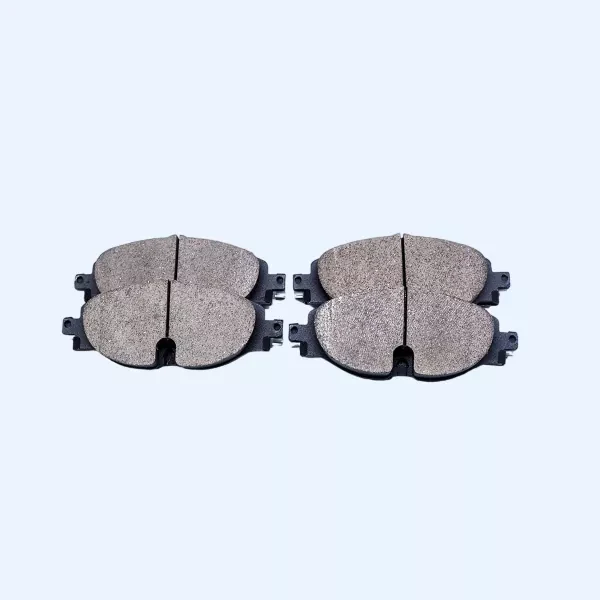
Quick Summary: OEM brake pads for fleet and aftermarket use should match the vehicle OEM's friction specification, pad geometry and backing-plate interface; validate through supplier-supplied dyno test reports, material safety data sheets, and fitment samples before batch acceptance. For bulk fleet procurement and commercial distribution, sourcing factory-direct container shipments from certified Chinese manufacturers provides 30–40% landed cost savings with full export compliance.
What "OEM brake pads" means for a commercial buyer
In B2B procurement language, "OEM brake pads" are replacement friction assemblies produced to the original equipment manufacturer’s fit and function specifications. For fleet buyers this means three core requirements: dimensional fit (pad shape and clip/slot interface), matching friction performance across temperature ranges, and acceptance by the vehicle OEM or the buyer’s engineering team. Suppliers may offer direct-to-OEM tooling or aftermarket equivalents certified to accepted test methods — always request the proofs described below.
Materials, formulations and performance characteristics
Common material families
- Semi-metallic — higher thermal capacity and durability for heavy duty use.
- Ceramic — lower noise and dust for passenger car applications.
- Low-metallic / organic — compromise between NVH and wear characteristics.
Material family determines expected noise (NVH), dust behavior, and typical wear patterns. Ask suppliers for material composition statements and SDS/MSDS for hazardous component checks and end-of-life disposal instructions.
Testing and inspection buyers should require
For credible acceptance, request:
- Third-party lab test reports (dynamometer friction vs temperature, fade/recovery cycles) — supplier should provide dated reports from accredited labs such as TÜV/SGS or equivalent.
- Fitment samples and CAD measurements to confirm backing plate geometry and pad spring/clip interfaces.
- Material Safety Data Sheets (SDS) and RoHS/REACH declarations where applicable.
- Batch traceability records and incoming inspection criteria (thickness, backing-plate coating, adhesion testing).
Compatibility and installation notes
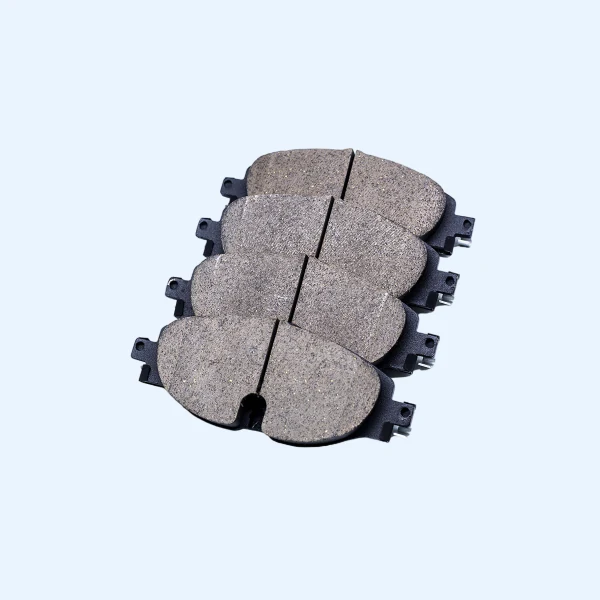
Compatibility is more than part number: request shim, sensor and hardware compatibility lists. For safe installation, check pad run-in recommendations and rotor condition tolerances. If the supplier offers OE-equivalent kits, confirm whether hardware (shims, clips, pins) is included or quoted separately.
Commercial evaluation table — buyer checklist
| Evaluation Criterion | What to request from supplier | Buyer assessment |
|---|---|---|
| Material family | Specify desired family (ceramic / semi-metallic / organic); request composition statement and SDS. | Confirm material matches fleet performance profile and SDS indicates no restricted substances. |
| Friction performance | Provide dyno/fade test reports and friction-coefficient ranges per operating temperature. | Accept only with lab reports from accredited test houses or OEM comparatives. |
| Dimensional fit | Supply CAD drawings or samples for dimensional verification and clip/slot fit tests. | Dimensional pass/fail must be verified in pre-production sample approval. |
| Durability / wear | Request abrasion/wear testing protocols and expected service life guidance based on vehicle duty cycles. | Evaluate against fleet historical wear data and request sample fleet trials where possible. |
| Certifications & testing | Ask for applicable test certificates (e.g., UNECE R90 where required), and third-party lab reports; request SDS and environmental declarations. | Accept products only when certificates and independent test data match buyer requirements. |
| Packaging & traceability | Request batch labels, lot codes, barcoding options and anti-corrosion packaging details. | Ensure warehouse and replacement logistics use batch codes for recalls and warranty handling. |
| MOQ & lead time | Supplier quotes MOQ per SKU; request sample lead times and production ramp schedules. | Confirm MOQs fit procurement plan; evaluate mixed-SKU container options if needed. |
Sourcing oem brake pads from China: Quality Standards, MOQ & Container Logistics
Documentation: request copies of test reports and certifications relevant to your market (for example, supplier test reports to recognized lab standards, component material declarations, and SDS). For markets requiring regulatory approval, buyers should confirm whether replacement parts are covered by UNECE R90 (Europe) or other local acceptance procedures and ask suppliers for applicable lab evidence. For the U.S. market, document acceptance by the vehicle OEM or internal engineering sign-off.
MOQ and mixed-container options: MOQ varies by supplier and tooling status; many factories offer sample runs and small-batch production before full tooling. Typical commercial MOQs for production SKUs are often in the hundreds to low thousands of pairs per SKU; suppliers commonly accept mixed-SKU consolidation for full-container loads (FCL) or less-than-container-load (LCL) consolidation. Request detailed MOQ and palletization options in writing.
Export lead times and port terms: commercial lead times depend on production scheduling and certification needs. Typical timelines seen in industry practice include sample approval and pre-production within a few weeks, and regular production runs scheduled thereafter; international shipping transit and customs clearance add additional time. Confirm export lead time with the supplier for your required delivery window. When arranging shipment terms, specify preferred Chinese load ports (for example, Qingdao or Ningbo) and request FOB, CNF or DDP quotations with estimated transit times; the supplier will confirm actual port of loading based on factory location and carrier availability.
Incoming inspection protocol for buyers
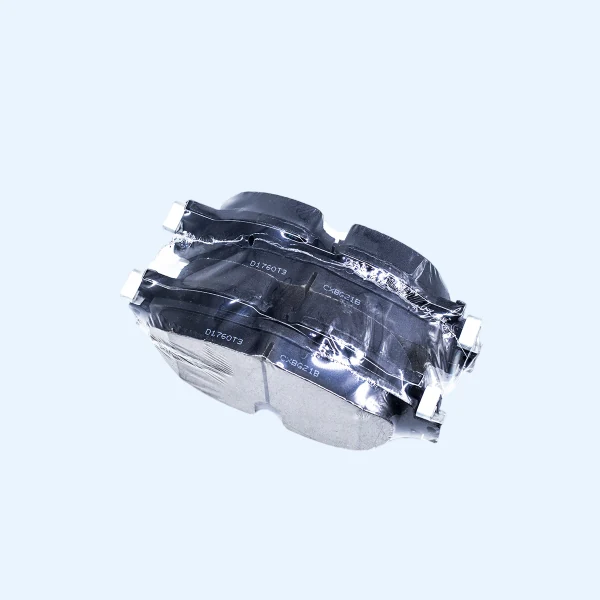
- Inspect packaging and batch codes against purchase order.
- Sample dimensional verification and visual QA on 1–2% of units for first shipments.
- Perform friction and thickness checks on arrival samples; retain samples for warranty reference.
- Run an acceptance fleet trial (limited vehicle deployment) before large-scale installation.
Warranty, service and supply continuity
Contractually define warranty scope (manufacturing defects vs wear), replacement lead times, and remedial responsibilities. For fleet operations, specify an agreed service-level for replacement supply and spare availability. Ask suppliers for historical MOQ flexibility and capacity headroom to manage sudden demand spikes.
Conclusion and next steps
For a practical procurement workflow: request pre-production samples and third-party lab reports, confirm fitment with engineering, negotiate MOQ and mixed-container consolidation options, and include arrival inspection criteria in the purchase contract. Work with your supplier to document packaging, batch traceability and export terms prior to committing to container bookings.
If you want to move forward, ask shortlisted suppliers for sample kits, accredited test reports, SDS, signed lead-time commitments and an itemized FOB/CNF quotation for container volumes.
Discuss your brake parts program
Share your OE references, quantities, destination market and packaging requirements for a factory review.
Request a quotation
Connect with our export team
Scan or use the channels below for product and quotation support.